
Key takeaways
Kids and teens can use debit cards through youth or joint accounts, typically requiring a parent or guardian as co-owner, with many institutions setting a minimum age around 13.
Debit cards help build financial literacy by teaching budgeting, saving, and responsible spending, though they also pose risks like overspending or vulnerability to scams.
Signs a child may be ready include consistent saving habits, responsible handling of money, and openness to conversations about financial decisions.
The best debit cards for kids offer parental controls, spending alerts, financial education tools, and low fees, with popular options including Greenlight and Fidelity Youth® Account Debit Cards.
Third-party brands and companies are mentioned for informational purposes only. Chime does not sponsor, endorse, or partner with any of these brands or companies, and they do not sponsor or endorse Chime.
Wondering if your kid is ready for a debit card? As a parent, you may think cash is the best way to hone your kids' spending skills. Debit cards are also a smart option, as they have several unique features and advantages that cash can't offer.
Even if cards are a great financial learning tool for kids, some key questions remain unanswered. What makes a debit card good for kids? At what age can you get a debit card for them?
Age requirements of debit cards
In most states, you need to be at least 18 to open a checking account and get a debit card. But, options exist for younger people to have access to spending accounts and debit cards.
Some banks offer special debit cards for kids and teens as long as a parent or guardian co-signs. In this case, both the child and the adult have their own debit cards linked to the same account. It's a great opportunity for your kids to get hands-on financial education with a trusted grown-up's guidance.
The age requirements vary from institution to institution. Many places require kids to be 13 for their cards and accounts.1
Benefits of debit cards for kids
Debit cards are an excellent way for your kids to take their first step toward financial literacy, but they have advantages and disadvantages. The table below summarizes the pros and cons of debit cards for kids.
Pros | Cons |
|---|---|
They require a PIN to access the funds even when the card is lost | Possible age limit restrictions |
Builds digital and financial literacy | Kids may overspend because of how easy debit cards are to use |
Immediate access to funds in case of an emergency | Kids may become targets of online scams and other forms of fraud |
How to tell if your kid is ready for a debit card
Here are a few signs you can use to help you decide whether your child is mature and capable enough to start handling their finances:
They show initiative by saving their spare money over a considerable period of time.
They carry their own wallet and keep it safe when they're out.
They don't ask for additional allowance money due to overspending.
They have developed other life skills (helping with groceries, household chores).
They are more open to discussions about spending wisely and have shown the motivation to save.
They set financial goals and have saved enough to achieve them at least once.
Your kid doesn't need to hit every one of these items to prove they're ready for their first debit card. No one knows your kid better than you, so what matters is that you trust them to use the debit card wisely and not as a way to show off to their friends.
If you decide they're ready, the next step is choosing a good debit card for beginners.
Important features of kids' debit cards
When choosing a debit card for your kid or teen, you may think that any card will do, like a prepaid card. However, some cards have features that make them better for kids than others.
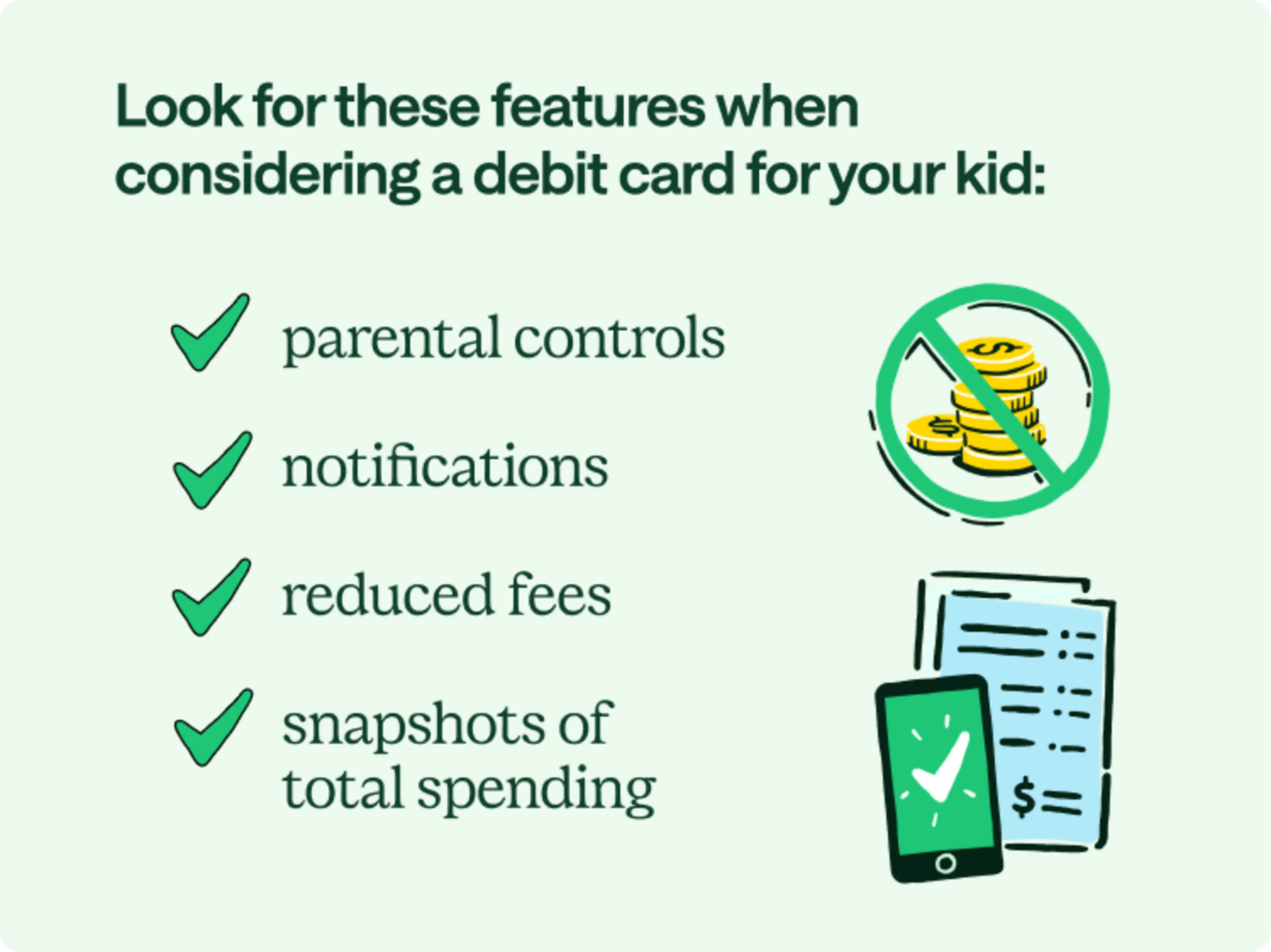
Debit cards for kids vary in features depending on the company that provides them. Still, they all function like a conventional debit card – the money your child withdraws or uses to make purchases is deducted from their cash account. Other features explicitly found in kids' debit cards include:
Parental control to monitor and decide how much money to deposit in the account.
Notifications to both parents and children whenever purchases are made to track and regulate transactions.
Reduced monthly fees and child-friendly access to other investment opportunities such as stocks and bonds.
Dashboards that contain a report and snapshots of your kid's total spending.
Financial literacy resources for kids to help them become thoughtful spenders.
These features can help your kid grow into a more financially responsible adult and provide them with valuable insights into how the world works.
Best debit cards for teens and kids
The best debit card for your kid is the one that empowers your child and provides the financial education necessary to help them adjust to managing their own finances. Here are some options to get you started.
Greenlight
Greenlight is a debit card targeted at starters. It allows parents to monitor and control their child's spending while offering an app you and your child can use to manage their money.
Parents have control over the amount of money being transferred and what stores and locations that money can be used in. You can even see the specific items your child is spending money on.
Their plans include chores, allowance, and investing features, and they offer financial literacy options.2
The card gamifies financial literacy, including how to invest. Your kids can learn skills to save for a car, college, or other training and later, for a house, and retirement.
The app even has financial literacy tools you can suggest to your kids' teachers to help them in the classroom.
Fidelity Youth® Account Debit Card
Another option is the Fidelity Youth® Account, a dedicated account for children with a no-fee debit card for teens ages 13-17. There are no monthly account fees or account minimums.
Fidelity also offers a Youth Learning Center, which provides additional support for children to help jumpstart their financial lives, including an investing option.3
Your teen can also open a brokerage account with as little as $1 and get the tools and education to manage it while you supervise.
Both these cards can help your kids learn the ins and outs of using a debit card.
Managing money is part of growing up
Teaching your kids to manage their finances is an important step in preparing them for their adult life. Starting with debit cards can propel them toward financial literacy. However, getting a debit card for your kid requires frequent guidance and support, as it's different from cash.
Education is key to becoming financially literate. If you need additional resources to help your child learn about how debit cards work, check out our full debit card guide.