
Editor’s note: This article was originally published on LinkedIn on 23 June 2026.
It seems like everyone today is building something. Right now, if you’re a builder, the time it takes to create truly highly personalized app experiences is insanely low. So much so that it’s impacting App Store approval times.
Driving this point home, the number of these kinds of apps I’ve built for myself, for friends, and family has gone through the roof. One of my recent hobbies has been trying to learn to surf. It turns out that I’m really good at the trying part, not so much the doing part, but that’s not true in building. Because I wanted to understand the best times to get out in the water I created a custom app for myself. I don’t anticipate others would use it, but for me, it’s perfect. Integrated to my calendar, easy to find local surf conditions, etc. This took an afternoon…
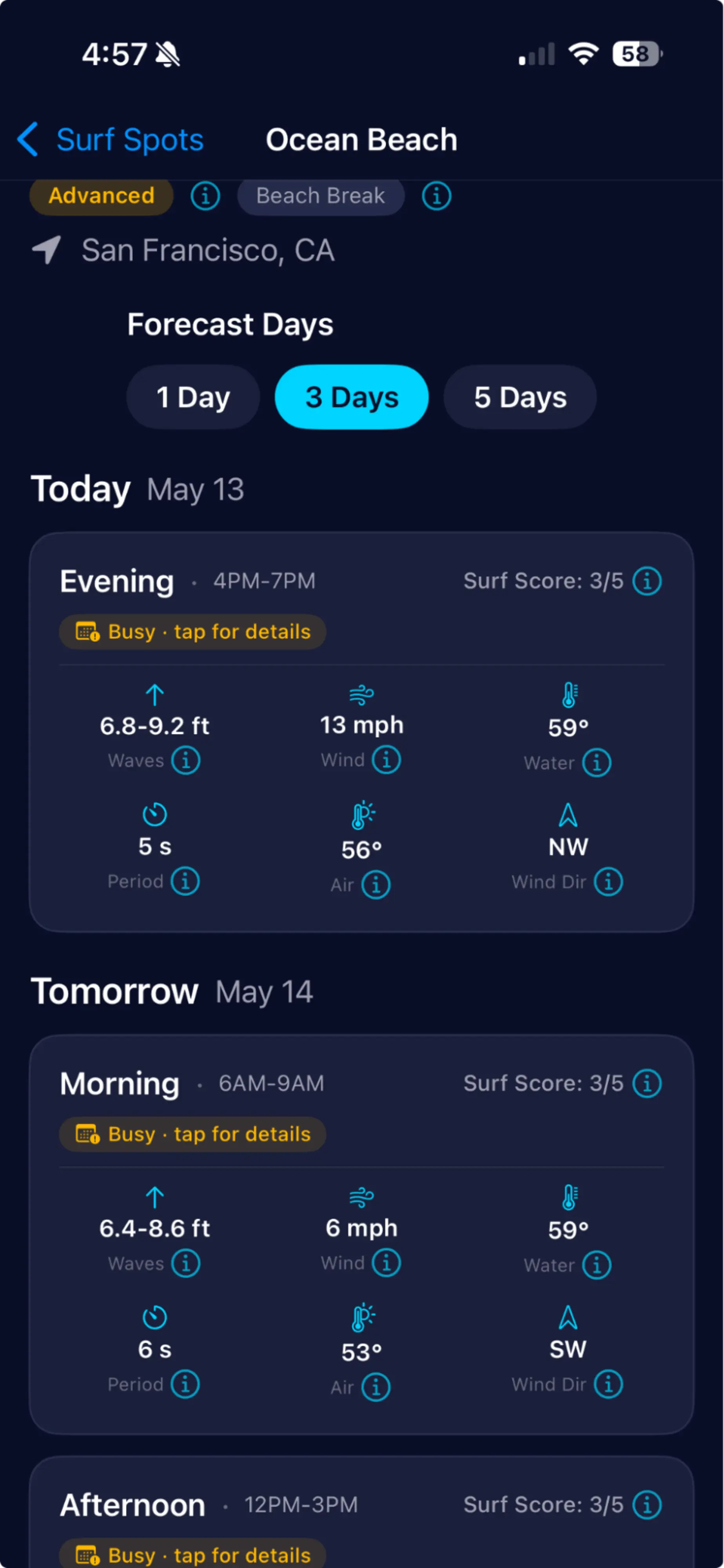
To build it, I used the usual culprits, Claude Code, Figma Make, (Claude Design I suppose now…), etc. All agent driven with basically no artisan / hand-coded artifacts. These tools, with the right prompts, claude.md files, guard rail definitions, clearly specified design patterns to follow, etc allowed me to easily direct a team of agents to do this – by myself, no other engineers, no PM (ok – I was doing both), all driven by an idea, good prompts, a team of agents all using frontier models. It was fun, useful and a great example of what you can do quickly.
But it also made me think that the question on the mind of every builder right now should be: If anyone, or more realistically any agent, can write the code, what is your real competitive advantage? How does this type of work fit into those areas that have historically been incredibly difficult? Think leader election problems in distributed systems – this is already incredibly hard (Paxos, Raft anyone?) – or in Chime’s case, the scale and regulatory environment we operate in.
Competitive Moats Are Changing
When anyone with great prompts and a frontier model can build a solid product at this speed, execution alone isn’t the moat it used to be. Imagine the buy vs build analysis that’s typically done at companies. As an example, when I began working at Microsoft there was an in-house tool that Microsoft developed internally called MsExpense. It was used to track any travel expense that you incurred and it made submitting expense reports trivial.
At the time, I remember thinking, why build that tool internally when there are other external tools available. Now, with the cost to build so low, the overhead of building and maintaining these types of solutions is often cheaper than the recurring licensing fees from a commercial tool. What’s more, these internal tools built quickly with agents can be tailored to you specifically, to your business, and your processes. You can’t easily or cheaply get that with commercial tools.
It’s often said that, “ideas are easy, execution is hard.” That statement requires some revision. Execution still matters – but it’s table stakes now, not the differentiator it used to be. What separates companies is what they’ve built around the software: scale, unique data, and insights, flywheels that only they have, things that can’t be replicated with a good prompt.
And then there are the industries that were never competing on code alone. Their advantages lie below the product layer, in non-software foundations — key infrastructure, regulatory licenses, contractual relationships. And in financial services, there’s yet another layer below that: the primary account, the center of someone’s financial life. Think air travel: booking software is fully commoditized, but airport slot rights, gate leases, FAA certifications? Models won’t create a new takeoff slot at SFO, SeaTac or Heathrow.
In the world we now live in, the moat isn’t pure software or pure foundation – it’s stacking both. Great software layered on top of these foundations are genuinely hard to copy. The world we live in here at Chime® – the regulatory complexity, the banking infrastructure, the depth of our member relationships – is one of the clearest examples of this.
Why You Can’t Vibe Code a Bank
Here at Chime, our advantage was never that we just wrote better code – ok, slightly biased opinion. It’s that we actually listen to our members and ship the things they don’t just want but need. It’s that we put in the years to build tools and trust you can’t prompt into existence. That member obsession, paired with the partnerships we’ve built, is what makes this work.
As Chris put it in our shareholder letter this year, “AI will accelerate nearly everything. It cannot shortcut bank partnerships, payment network relationships, and compliance infrastructure.”
Bank partnerships are a great example. Chime’s relationships with our sponsoring banks Bancorp and Stride took years to build. Same with payment networks – connecting to Visa, Mastercard, ACH, RTP requires technical certification and deep, ongoing integration work. These aren’t trivial or items to check off a list, they’re the foundation of the business. If any of them crack, it hits where it matters most: our members’ wallets.
The Hard Part Was Already Done
In the end, the model layer is commoditizing in plain sight – smarter, more capable, trained with better data. But the foundation underneath it is not. So the better and cheaper the models get, the more valuable it is to have a real place to put them to work, a primary account, a ledger we control, partnerships and compliance already in place. The question that matters isn’t who builds the best model, but who has the foundation to actually use those capabilities. Not just responsibly, but at scale, with the trust of their members to act on their behalf. That takes years. We’ve already put those years in.
Interestingly, trust might be the most important but underrated factor. Outside the AI hypercycle bubble, handing control over your money to an AI is not something most Americans are eager to do. Chime starts from a different place: 95% of our members say they trust Chime more than a traditional bank (see disclosure 1) . In a world where software acts on people’s money, that trust isn’t a nice-to-have, it’s the precondition for any of this to work.
So what does it look like when you combine AI with that kind of foundation? For us, it looks like JadeTM – our financial co-pilot that optimizes a person’s entire financial life. The idea is simple: the member sets the goal, Jade does the work. It understands a member’s complete financial picture – every paycheck, every tradeoff, every pattern – and with their permission, acts on their behalf. That last part is key. Acting on someone’s behalf with their money isn’t something you get to do because you have a good model. You get to do it because you’ve earned the right to.
And as the engineer responsible for this, I’d add that earning the right is an architecture problem too, not just a trust one. Because we own our stack from the ledger up, we can enforce what Jade is permitted to do in code that runs before any action executes, regardless of what the model recommends. A company running an AI on top of someone else’s banking core can’t enforce rules at a ledger it doesn’t control. Jade works because of everything underneath it.
The opportunity in front of us makes this even more urgent. Today, we have less than 5% penetration in a market of nearly 200 million Americans. You can vibe code a lot of things. You can build a beautiful interface in an afternoon. I know – I did it for my surf app. But what you can’t do, no matter how good the model, is shortcut years of infrastructure, partnerships, and earned trust. That’s what Chime has spent over a decade building. For companies without it, AI is a threat. For Chime, it’s fuel.