
 Log in



Key takeaways
- You can void a check quickly by writing “VOID” across it – just be sure not to sign it.
- A voided check is unusable for payment, but is safe to share for direct deposit or automatic bill pay.
- If you don’t have a checkbook, you can use alternatives like a deposit slip, a direct deposit form, or a starter (“counter”) check from your bank.
A voided check can help you set up direct deposit or automatic bill payments. Although voiding a check might sound complicated, it’s actually simple – and you can do it in under 30 seconds.
Here’s how to void a check properly to keep your personal information and bank account secure and protect your account from fraud or errors.
What is a voided check for direct deposit or autopay?
A voided check is a paper check with the word “VOID” written across it. Voiding a check makes it unusable for payment or withdrawal, ensuring no one can use it to gain access to your checking account.
Voided checks show your bank account and routing information, so you’ll want to make sure you void them correctly to prevent misuse.
How to void a check
How do you void a check? It’s a simple process. All you need is a pen and a blank check. Here’s how to do it, step by step.
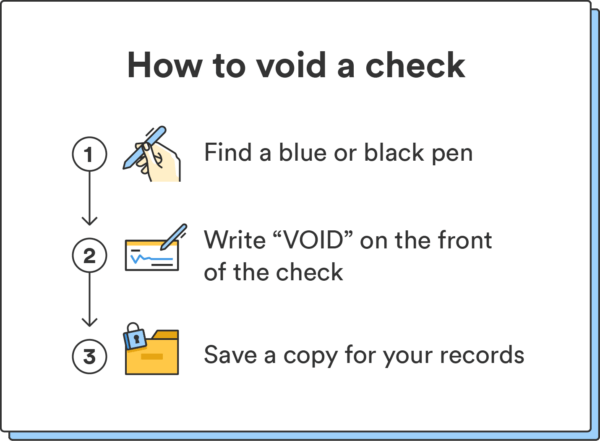
- Find a blue or black pen with permanent ink.
- Write “VOID” on the front of the check in large letters.
- Leave the signature line blank to avoid confusion or misuse.
- Save a copy of the voided check
- Record the voided check in your register
Voiding a check is a different process from writing a check, though both are essential life skills to know.
Why do I need a voided check?
A void check is a safe way to verify your banking information. There are several reasons you may need to void a check, including the following:
- Direct deposit setup: When you set up direct deposit, you can use a voided check to provide your employer with your bank account information.
- Automatic payment setup: Some autopay methods require you to submit a voided check tied to your bank account.
- Automated Clearing House (ACH) transfers: Businesses often use ACH to pay vendors or send online payments to the IRS and may require a voided check.
- Account verification: You may need to verify your account information using a voided check when renting a new apartment, signing up for a financial app, or linking accounts at different financial institutions.
- Incorrect information: If you wrote the wrong amount on a check, addressed it to the wrong person, or dated it incorrectly, voiding it keeps others from using it.
When to use a voided check
Here are the most common situations where a voided check is useful:
- Setting up direct deposit
- Enrolling in automatic bill payments
- Connecting bank accounts
- Receiving ACH payments
- Correcting mistakes
How to void a check if you don't have paper checks
These days, paper checks are becoming rare, and many financial institutions no longer provide checkbooks. If you don’t have any paper checks, you may be able to get a voided check in other ways.
- Ask your bank for a starter check. This is a temporary check you might receive when you first open an account. If your bank has a physical branch, you can request a starter or counter check from a teller.
- Request a direct deposit form. Some employers have a form that lets you enter your bank account and routing numbers instead of providing a voided check.
- Download an ACH letter. Your bank may offer an ACH form pre-filled with your account information that you can download and give to your employer.Print a check from your online banking portal. Some banks will let you print a voided check from their website. Check with your bank to see if this is an option.
Safety precautions with voided checks
Although a voided check can’t be used to withdraw money from your account, it can still cause problems if it falls into the wrong hands. Is a voided check safe to share? Yes, but you can keep your account safe by:
- Only sharing voided checks with trusted parties
- Sending voided checks through secure channels
- Storing or shredding the original voided check
How to dispose of a voided check
Because a voided check still contains sensitive information — including your bank account and routing numbers — it’s important to dispose of it securely.
To safely dispose of a voided check, shred it using a cross-cut shredder so your account information can’t be reconstructed. If you don’t have a shredder, tear the check into very small pieces, especially around the routing and account numbers, and throw them away separately.
Common mistakes when voiding checks
Being aware of common mistakes that can occur when voiding a check can help you avoid them. Some examples include:
- Writing too small or light: Writing “VOID” in small letters or in ink that’s difficult to read could result in confusion or potential misuse of your check.
- Using pencil or erasable ink: Permanent ink prevents tampering and ensures security.
- Writing over the routing and account numbers: If your employer can’t see these important numbers, they may be unable to set up direct deposit correctly.
- Signing the check: Do you sign a voided check? In short, no. Unlike a regular check, there’s no need to sign or endorse a voided check. Doing so can cause confusion.
- Failing to record: If you forget to record that you voided a check, this can lead to mistakes when you go to balance your checkbook or check register.
- Mailing the only copy: It’s best to keep the original and mail only copies for added security. You can also send a photo of a voided check if allowed by your employer.
- Improper disposal: Forgetting to properly destroy and dispose of your check can make you vulnerable to identity theft or other fraudulent activity. Shred the void check so it’s no longer legible – the same way you would with a mobile check deposit once it’s cleared.
Voiding checks is easy
Paper checks are becoming a thing of the past, but there are still instances when you need them. Knowing what a voided check is and how to get one helps you set up direct deposit and automatic payments with ease.
Learn more about how to write checks.
How to write a void check for direct deposit
If your employer requires a voided check to set up direct deposit, take a blank check from your checkbook and write “VOID” in large, clear letters across the front. Make sure not to sign the check, and avoid covering your routing and account numbers since those are needed to confirm your banking details.
Once voided, you can provide the check to your employer or payroll department as proof of your account information.
Alternatives to a voided check for direct deposit
If your checking account doesn’t offer checks, you may be able to use another method to verify your bank account information.
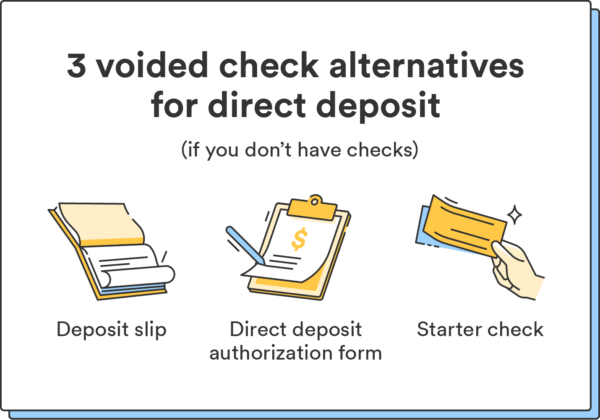
Here are some alternatives to voided checks:
- Direct deposit authorization form: Your employer may offer a direct deposit authorization form. You can fill in your routing and bank account numbers on this form instead of a voided check.
- Letter on bank letterhead: Ask your bank to provide an official letter with your bank details, and use it in place of a cancelled check for direct deposit if possible.
- Deposit slip with routing number: If your bank offers deposit slips (these also contain your routing and bank account numbers), see if your employer would accept one instead of a check.
- Submitting your banking information online: When setting up bill payments or linking accounts, many banks and service providers let you enter your routing and account numbers directly through a secure online portal. This eliminates the need to share a paper check altogether.
Frequently asked questions about voided checks
Can you go to the bank and get a voided check?
Yes, if your bank has a physical branch, you can speak with a teller and request a voided check. The bank can void the check by stamping or writing “VOID” on it.
How do you get a voided check online?
You can often get a voided check online by logging into your bank’s website or mobile banking app and selecting an option to request a voided check. Some banks also offer the ability to print a voided check directly from their website.
Why would you void a check?
You may need a voided check to set up a bank account, direct deposit, or automatic bill payment. You may also decide to void a check if you filled it out wrong or completed a mobile deposit and want to prevent others from using it.
What can someone do with a voided check?
A voided check still shows information about you and your bank account. It will likely have your name, address, bank name, account number, and routing number. If someone has your voided check, they can see and use all of this information.
Why do employers ask for voided checks?
Employers might ask for a voided check to set up direct deposit. They can use your void check to get account information and confirm that your paycheck is going into the correct account.
Do you sign a voided check?
No, you do not sign a voided check. Instead, just write “VOID” on it in large letters. When you void a check, it becomes invalid and unusable.
Can you cash a voided check?
No, you cannot cash a voided check. The purpose of a voided check is to certify your bank account information. Once you void a check, it becomes invalid and useless for payment.
How long is a voided check valid for direct deposit setup?
Voided checks are valid for direct deposit setup as long as the account is still open. While personal checks generally expire after six months, a voided check will only expire if you close your account or if your routing or account number changes.
Does creating a voided check cost money?
No, voiding a check usually doesn’t cost anything. However, fees may apply if you don’t have a checkbook and need to request a voided check or a counter check from your bank.
How to void a check that was lost?
If you lose a check before you can void it, contact your bank right away. They can place a stop payment on the check so it can’t be cashed or deposited.
Is it safe to email a voided check?
Emailing a voided check can be safe if you use a secure, encrypted email system and the recipient is someone you trust, such as your employer or a known service provider.
Is it safe to throw away a voided check?
It’s not recommended to throw away a voided check intact. Even though it’s voided, it still contains your routing and account numbers. Instead, shred the check.
Is it safe to give someone a voided check?
Yes, it’s generally safe to give a voided check to a trusted party, such as your employer or a financial institution, because the check can’t be used for payment once voided. Still, you should only provide it to organizations or individuals who legitimately need your banking information, and avoid sharing more widely than necessary.